What the Next Decade of STEM Education Looks Like
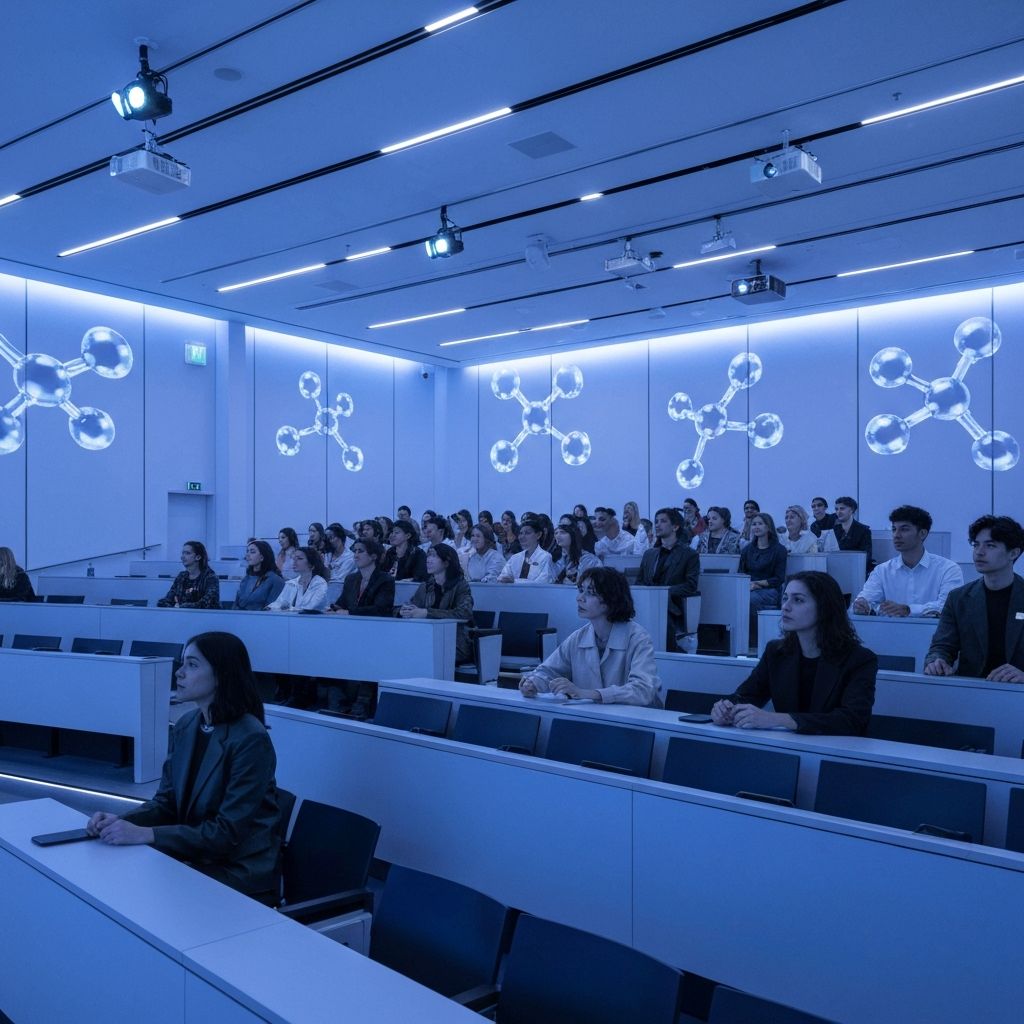
The next ten years will bring more change to STEM education than the previous fifty. The forces driving this transformation are already visible: advances in AI, shifting student expectations, workforce demands for different skills, and a growing body of research on how people actually learn.
Here is what we expect to see.
Adaptive Learning Becomes the Default
The idea of adaptive learning is not new. Intelligent tutoring systems have existed since the 1970s. What has changed is that modern AI makes them dramatically more capable.
Within the next decade, we expect most introductory STEM courses to incorporate some form of adaptive AI tutoring. Not as an optional supplement, but as a core part of the instructional design. The economics are compelling: AI can provide individualized attention that would require an army of human tutors to replicate.
The shift will be gradual. Early adopters are already using tools like LabNotes.ai. By the end of the decade, the question will not be whether to use AI in teaching but how to use it well.
Competency Over Credit Hours
The credit hour system -- measuring education by time spent in a seat rather than demonstrated mastery -- has been criticized for decades. AI-powered assessment makes competency-based alternatives more practical.
When an AI tutor can continuously assess a student's understanding across dozens of concepts, the question "Has this student spent 45 hours in this course?" becomes less relevant than "Can this student apply Le Chatelier's Principle to novel situations?"
We expect to see more programs experiment with competency-based progression, where students advance when they demonstrate understanding rather than when the semester ends.
The Lecture Evolves
The traditional lecture will not disappear, but its role will change. When students can get explanations and practice from an AI at any time, the value of a professor standing at a podium and delivering information decreases.
What increases in value: everything a professor can do that an AI cannot.
- Inspire curiosity about problems the student did not know existed
- Model expert thinking by working through genuinely challenging problems in real time
- Facilitate discussion where students engage with each other's ideas
- Provide mentorship on career paths, research opportunities, and professional development
The best professors already do these things. AI-powered tools will free more class time for them.
Lab Experiences Get Smarter
Physical laboratory work remains essential in STEM education. You cannot learn bench chemistry from a chatbot. But AI can transform how students prepare for, reflect on, and learn from lab experiences.
Pre-lab AI tutoring can ensure students understand the principles before they walk into the lab. Post-lab analysis can help students connect their observations to theory. Real-time guidance can help students troubleshoot experimental problems without waiting for a TA to become available.
The lab does not become virtual. It becomes better supported.
Assessment Transforms
This may be the most significant change. When AI can continuously monitor student understanding, the high-stakes exam becomes less necessary as an assessment tool.
Imagine a course where the professor has a real-time dashboard showing exactly what each student understands and where they are struggling. End-of-term exams become confirmatory rather than revelatory. There are no surprises, for students or instructors.
This shift also has implications for equity. High-stakes exams disproportionately disadvantage students with test anxiety, those from underprepared backgrounds, and those dealing with personal challenges during exam week. Continuous assessment distributes the stakes more evenly.
What Educators Should Do Now
For professors and administrators watching these trends, our advice is straightforward:
-
Experiment early. Pilot AI tutoring tools in one course this year. The learning curve for instructors is real, and starting now builds institutional knowledge.
-
Rethink assessment. Begin designing assignments where the process is as important as the product. AI-powered tutoring conversations, reflective journals, and portfolio-based assessment all align better with where education is heading.
-
Focus on what makes you irreplaceable. Invest your time in the things AI cannot do: building relationships with students, inspiring intellectual curiosity, and modeling the messy, creative process of real scientific thinking.
-
Stay informed. The pace of change in AI is extraordinary. What was impossible last year is routine this year. Understanding the capabilities and limitations of current AI tools is essential for making good pedagogical decisions.
The Opportunity
We are at an inflection point. The tools to deliver personalized, effective STEM education at scale are becoming available for the first time. The question is whether institutions will adapt quickly enough to use them well.
The students are ready. The technology is ready. The question is whether the systems around them are.